I think a great way to start linking art history and archaeology together is to answer the question: What makes art, art? In short, art is subjective and so is its definition. Merriam Webster defines art as: the conscious use of skill and creative imagination especially in the production of aesthetic objects. Dictionary.com defines art as: the quality, production, express, or realm, according to aesthetic principles, of what is beautiful, appealing, or of more than ordinary significance. Art may also be defined by the arrangement of elements in aesthetic manner to convey an idea, emotion, or world view. For this blog’s purpose we will be using the last definition. I feel as if it is the most broad definition and most encapsulating.
Art is often thought of as paintings, photographs, drawings, etc. however art can take form in many different ways. This can include: clothing, coins, cooking ware, architecture, and much much more. But as stated before, art is determined by the viewer and the definition that they hold. This also goes for the value of an art work, and how professional or “good” an artwork is.
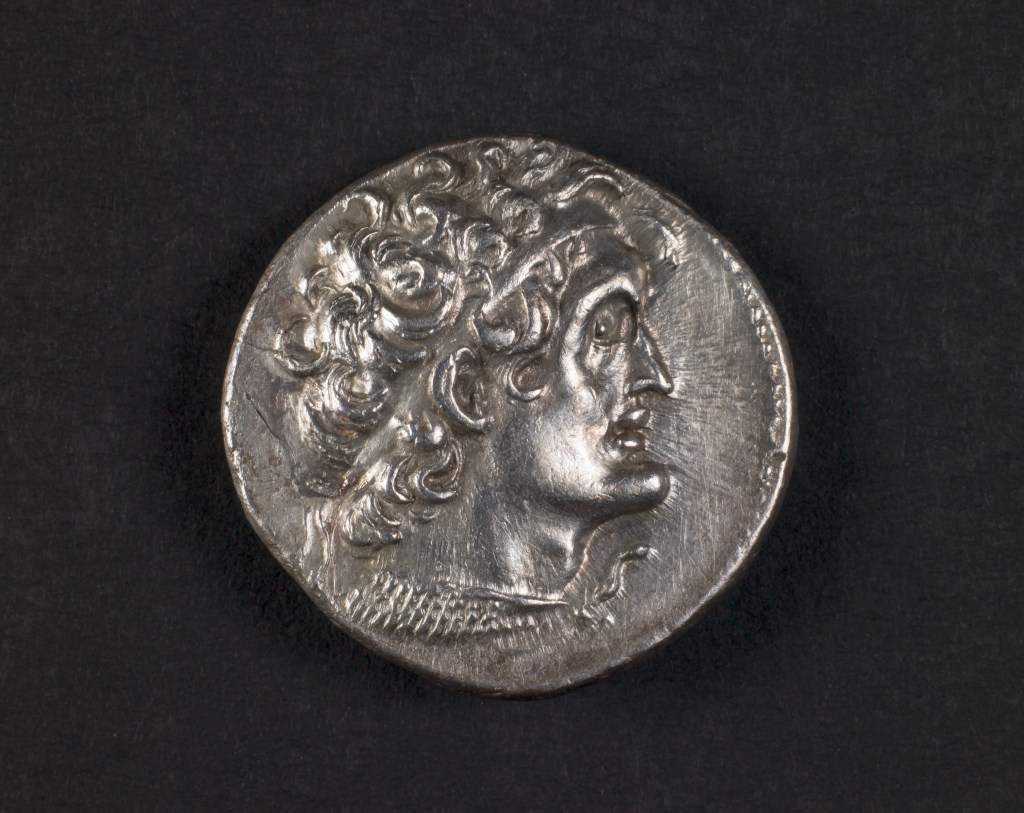
Egyptian (ancient); Greek (ancient), c.900–31 BC
St. Louis Art Museum
Item Number: 226:1991
Art is often assessed by the elements and principles in the art piece. The elements include: texture, form, space, shape, color, value, and line. The principles of art include: movement, unity, harmony, variety, balance, contrast, proportion, and pattern. The interaction between these elements and principles are how art pieces are composed and evaluated. Many art theories have been developed with a wide variety of opinions about what makes an artwork good.
These theories include: formalism, imitationalism/mimetic, instrumentalism, and emotionalism. Formalism states that “art is good when it effectively uses the elements of art and principles of design”. Imitationalism/mimetic states that art is best when it represents real life and realism. Instrumentalism is concerned with the composition of the artwork as well as the context and the message the artwork is trying to convey. Emotionalism is mainly focused with the expression and the communication between the artwork and the viewer. All this being said when the average viewer sees an artwork they make judgements based on their own set standards to evaluate whether an artwork is good or not. I personally determine whether an artwork is good based off of many different things like the artist’s purpose and the time period and culture that artwork came from. Art made in a small village in Mexico 600 years ago may have been good for that specific time period and culture, but for today’s standards of modern art maybe not so much. I think putting an artwork in context is what is most important when evaluating an artwork.
For this blog’s purpose and for your own I encourage you to think about these definitions and think more critically about your own judgement of art. We all have been guilty of making split judgments on artwork we see in our everyday lives whether that be a logo, a commercial, or a Jackson Pollock painting. I encourage you to think of context, the artists’ purpose, the emotion behind the piece, and what the artist is trying to convey to the viewer.
If you have any comments, questions, or suggestions about future blog posts let me know!
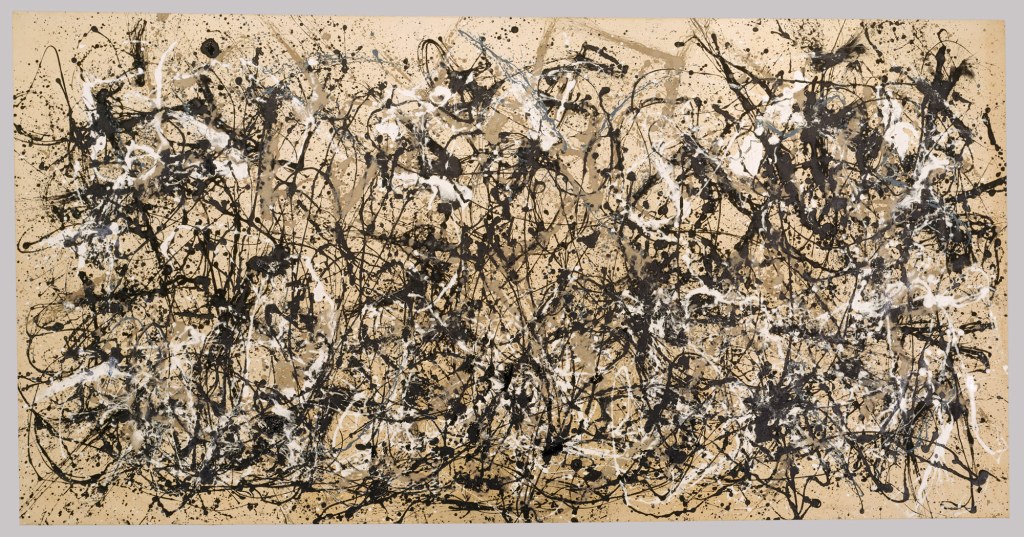
Jackson Pollock 1950
The Metropolitan Museum of Art
Item Number: 57:92
 Art & Arch